




ARTITEQ Shadowline Masonry Picture Rail 250cm White Primer (20kg/m)
£39.60
Specifically designed for use on masonry walls. Perfect for installation with suspended and recessed ceilings.
PRODUCT INFORMATION
colour: pure white (RAL 9016)
length: 250cm
profile: 12.5mm
capacity: 20kg per meter
Only 3 left in stock
h2>ARTITEQ Masonry Rail
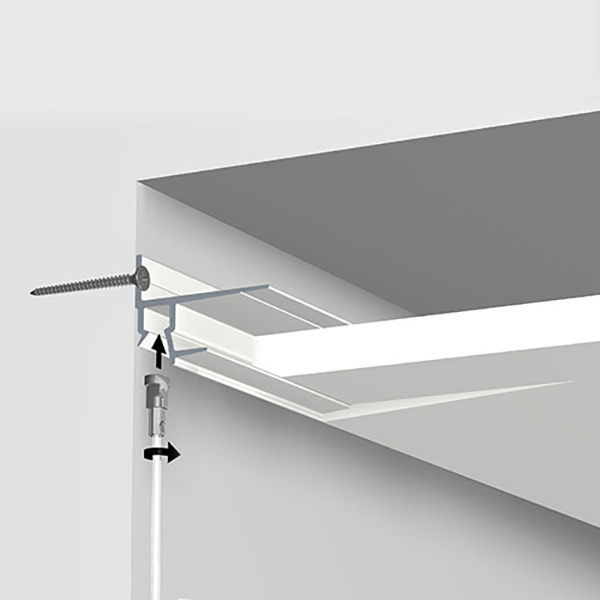
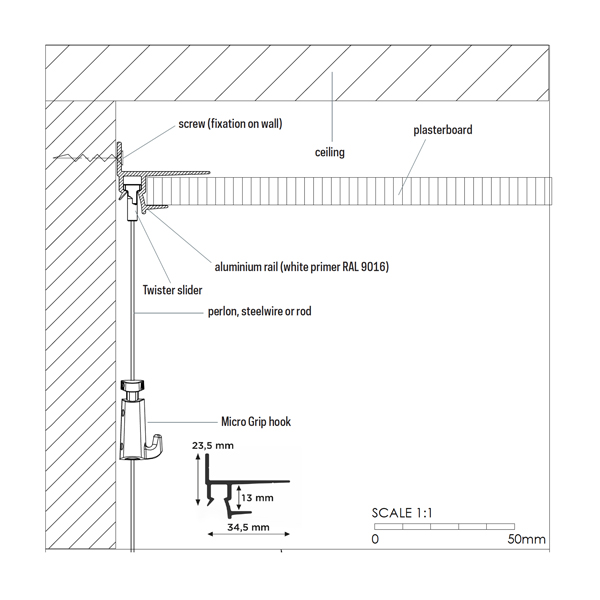
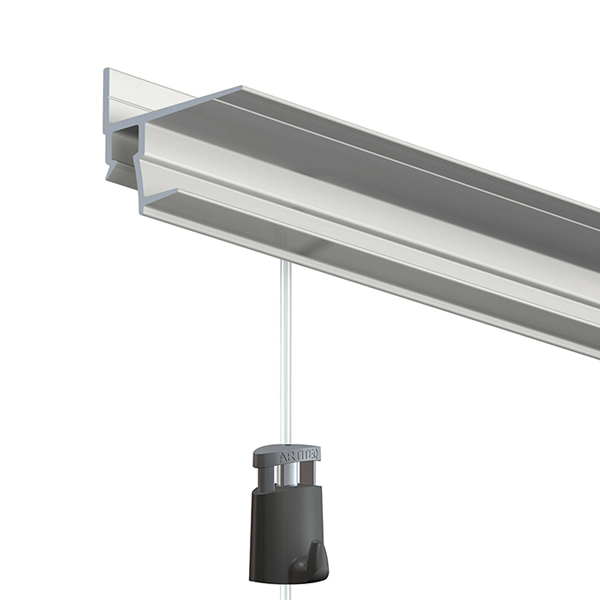
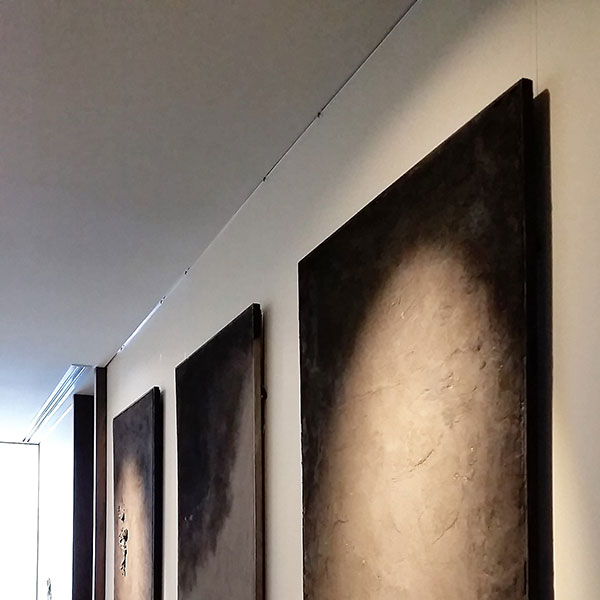
The ARTITEQ Masonry Rail (Shadowline) is an architectural, built-in picture hanging profile created for installation along solid brick, block, rendered, or concrete walls paired with plasterboard ceilings. Fitted during construction or renovation, the extruded aluminium rail mounts flush against the wall substrate. The plasterboard ceiling sheet rests directly against the integrated profile lip, leaving only a subtle, recessed shadow gap along the ceiling perimeter while completely concealing the track hardware. The profile comes pre-treated in a paintable white primer finish (RAL 9016), allowing it to be taped, skimmed, and painted alongside the ceiling for a seamless finish. Once installed, it supports a weight capacity of up to 20 kilograms per meter. Art suspension wires equipped with specialised Twister fittings slide into the hidden slot at any point along the shadow line, enabling total artwork layout customisation without drilling into or damaging finished walls.
What’s included
ARTITEQ Masonry Rail 250cm white primer max. 20kg/m (Qty 1)
Installation begins during the rough-in stage before plasterboard ceiling panels are fixed and finished. The installation height is established by drawing a level line across the masonry wall at the designated ceiling height. The aluminium rail is measured and cut to length using a metal hacksaw or mitre saw if adjustments are needed. The profile is placed against the wall at the layout line, and fixing holes are marked directly onto the masonry substrate. Holes are drilled into the stone or brick to accommodate standard masonry wall plugs, typically spaced every 25 to 30 centimetres. Plugs are inserted, and the rail is screwed tightly into the wall using appropriate masonry fasteners.
With the rail fixed in place, the ceiling plasterboard sheets are lifted into position, slotting directly into the receiving lip of the Shadowline rail. The plasterboard is then fastened to the timber or steel ceiling joists according to standard drywall procedures. Joint tape and setting compound are applied over the seam where the plasterboard meets the rail flange, then sanded once dry. Finally, latex ceiling paint is applied over the joint and rail flange to blend the profile entirely into the overhead surface, leaving the recessed channel ready to receive hanging cords.
| Brand | ARTITEQ |
|---|---|
| Max Weight | 20 kg (44 lbs) |
| rail colour | pure white finish (paintable, RAL9016) |
| Rail Length | 200 cm (78.7 in), 250 cm (98.4 in) |
Related products
£32.40
Specifically designed for use on masonry walls. Perfect for installation with suspended and recessed ceilings.
PRODUCT INFORMATION
colour: pure white (RAL 9016)
length: 200cm
profile: 12.5mm
capacity: 20kg per meter
